1. Camera Captures Video

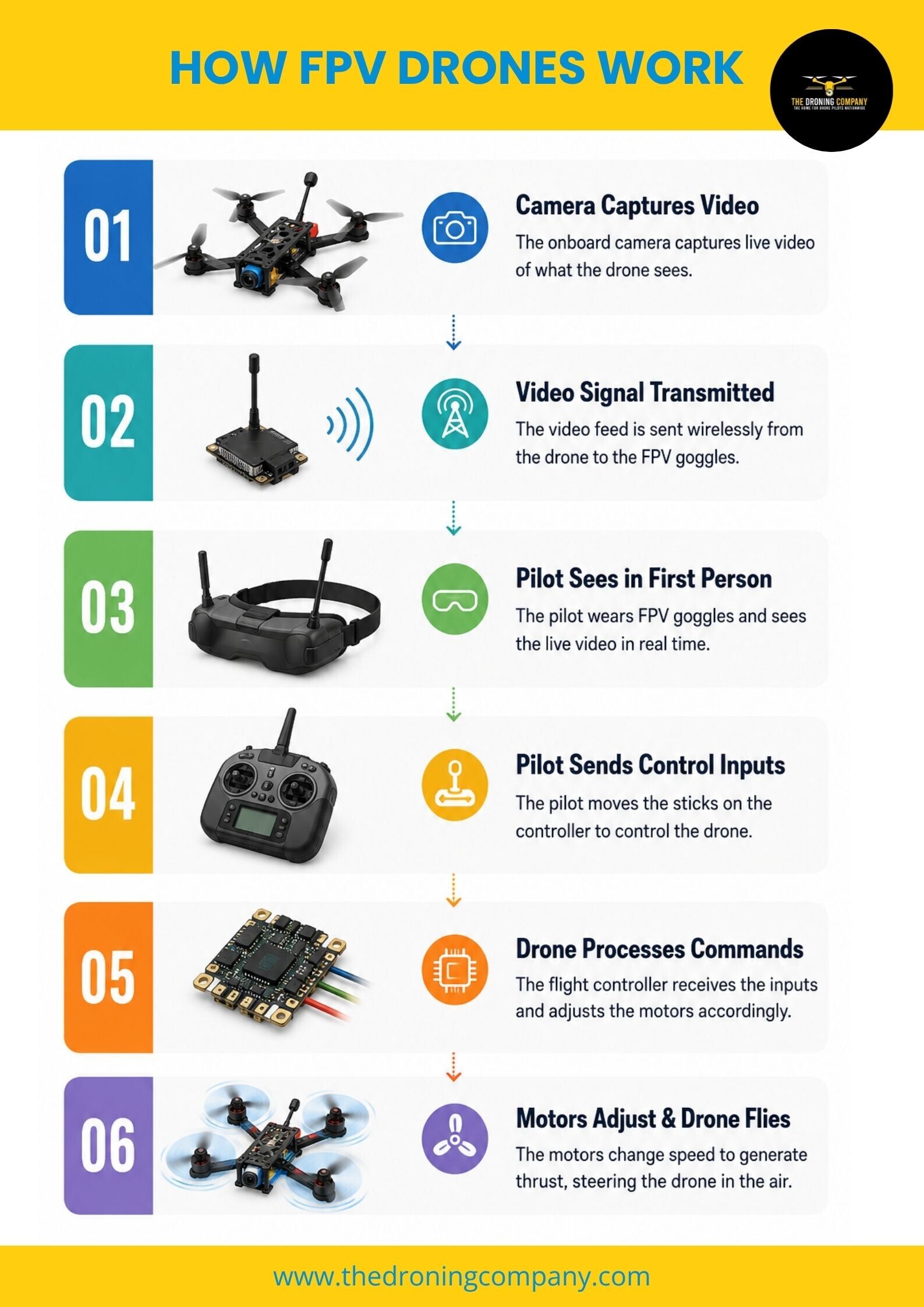
The FPV drone is equipped with an onboard camera mounted at the front of the aircraft. As the drone flies, the camera continuously records the surroundings and captures real-time video from the drone's perspective.


2. Video Signal is Transmitted

The live video captured by the camera is sent to a Video Transmitter (VTX) installed on the drone. The VTX wirelessly broadcasts the video signal to the pilot's FPV goggles or display device, usually with very low latency.

3. Pilot Sees in First Person

The pilot wears FPV goggles that receive the transmitted video feed. This creates an immersive first-person experience, making the pilot feel as though they are sitting inside the drone and flying through the air.


4. Pilot Sends Control Inputs

Using a radio controller, the pilot sends commands such as throttle, pitch, roll, and yaw. These inputs determine the drone's speed, altitude, direction, and movement while in flight.


5. Drone Processes Commands

The drone's flight controller acts as its brain. It receives the control signals from the pilot and processes them along with sensor data from components such as gyroscopes and accelerometers. The flight controller then calculates the adjustments needed for stable flight.


6. Motors Adjust and the Drone Flies

Based on the flight controller's calculations, the Electronic Speed Controllers (ESCs) regulate the speed of each motor. The motors spin the propellers at different speeds, generating thrust and enabling the drone to move forward, backward, sideways, upward, or perform aerial maneuvers.

Learn more How FPV Drones Work: https://thedroningcompany.com

23 瀏覽次數

How FPV Drones Work

已上傳至3 天 以前

1. Camera Captures Video

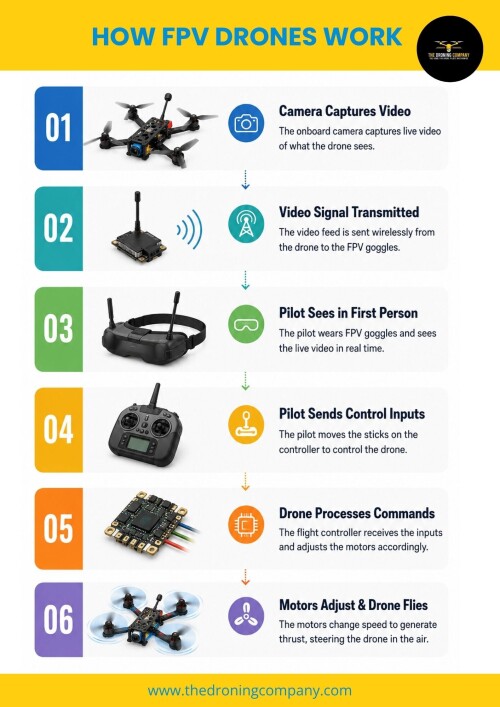
The FPV drone is equipped with an onboard camera mounted at the front of the aircraft. As the drone flies, the camera continuously records the surroundings and captures real-time video from the drone's perspective.


2. Video Signal is Transmitted

The live video captured by the camera is sent to a Video Transmitter (VTX) installed on the drone. The VTX wirelessly broadcasts the video signal to the pilot's FPV goggles or display device, usually with very low latency.

3. Pilot Sees in First Person

The pilot wears FPV goggles that receive the transmitted video feed. This creates an immersive first-person experience, making the pilot feel as though they are sitting inside the drone and flying through the air.


4. Pilot Sends Control Inputs

Using a radio controller, the pilot sends commands such as throttle, pitch, roll, and yaw. These inputs determine the drone's speed, altitude, direction, and movement while in flight.


5. Drone Processes Commands

The drone's flight controller acts as its brain. It receives the control signals from the pilot and processes them along with sensor data from components such as gyroscopes and accelerometers. The flight controller then calculates the adjustments needed for stable flight.


6. Motors Adjust and the Drone Flies

Based on the flight controller's calculations, the Electronic Speed Controllers (ESCs) regulate the speed of each motor. The motors spin the propellers at different speeds, generating thrust and enabling the drone to move forward, backward, sideways, upward, or perform aerial maneuvers.

Learn more How FPV Drones Work: https://thedroningcompany.com
編輯或通過點擊圖像預覽調整圖像大小
通過點擊圖像預覽來調整任意圖像
上傳中 0 圖片 (0% 完成)
佇列上傳中. 需要一點時間來完成
上傳完成
上傳的內容已經添加到 您已經可以使用剛剛上傳的建立新相簿
上傳的內容已經添加到
您已經可以使用剛剛上傳的建立新相簿 您必須 建立新帳號登入 才能將此內容保存到您的帳戶中。
沒有圖片已經上傳
Some errors have occurred and the system couldn't process your request.
    取消取消剩下的
    注意: 部分圖片無法上傳. 了解更多
    檢查 錯誤報告 來了解更多訊息.
    JPG PNG BMP GIF 25 MB