1. Camera Captures Video

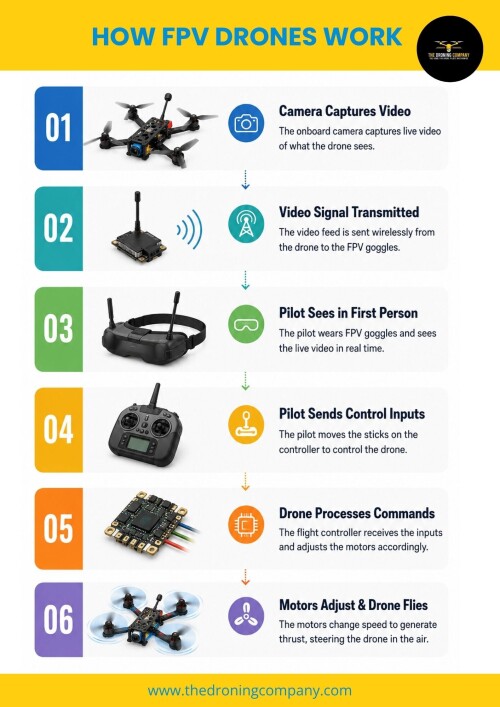
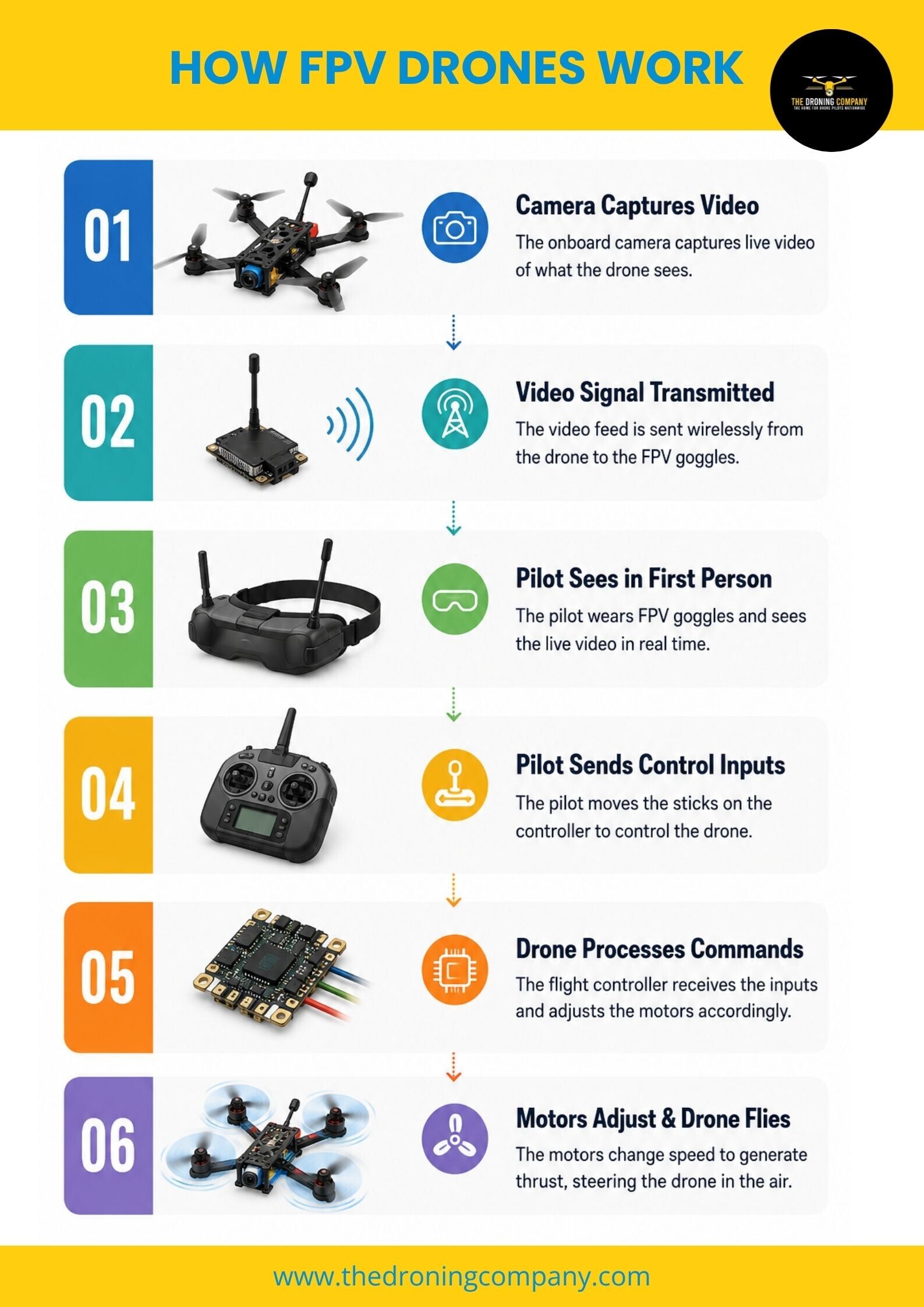
The FPV drone is equipped with an onboard camera mounted at the front of the aircraft. As the drone flies, the camera continuously records the surroundings and captures real-time video from the drone's perspective.


2. Video Signal is Transmitted

The live video captured by the camera is sent to a Video Transmitter (VTX) installed on the drone. The VTX wirelessly broadcasts the video signal to the pilot's FPV goggles or display device, usually with very low latency.

3. Pilot Sees in First Person

The pilot wears FPV goggles that receive the transmitted video feed. This creates an immersive first-person experience, making the pilot feel as though they are sitting inside the drone and flying through the air.


4. Pilot Sends Control Inputs

Using a radio controller, the pilot sends commands such as throttle, pitch, roll, and yaw. These inputs determine the drone's speed, altitude, direction, and movement while in flight.


5. Drone Processes Commands

The drone's flight controller acts as its brain. It receives the control signals from the pilot and processes them along with sensor data from components such as gyroscopes and accelerometers. The flight controller then calculates the adjustments needed for stable flight.


6. Motors Adjust and the Drone Flies

Based on the flight controller's calculations, the Electronic Speed Controllers (ESCs) regulate the speed of each motor. The motors spin the propellers at different speeds, generating thrust and enabling the drone to move forward, backward, sideways, upward, or perform aerial maneuvers.

Learn more How FPV Drones Work: https://thedroningcompany.com
21 lượt xem

How FPV Drones Work

Đã up lên cách đây 3 ngày

1. Camera Captures Video

The FPV drone is equipped with an onboard camera mounted at the front of the aircraft. As the drone flies, the camera continuously records the surroundings and captures real-time video from the drone's perspective.


2. Video Signal is Transmitted

The live video captured by the camera is sent to a Video Transmitter (VTX) installed on the drone. The VTX wirelessly broadcasts the video signal to the pilot's FPV goggles or display device, usually with very low latency.

3. Pilot Sees in First Person

The pilot wears FPV goggles that receive the transmitted video feed. This creates an immersive first-person experience, making the pilot feel as though they are sitting inside the drone and flying through the air.


4. Pilot Sends Control Inputs

Using a radio controller, the pilot sends commands such as throttle, pitch, roll, and yaw. These inputs determine the drone's speed, altitude, direction, and movement while in flight.


5. Drone Processes Commands

The drone's flight controller acts as its brain. It receives the control signals from the pilot and processes them along with sensor data from components such as gyroscopes and accelerometers. The flight controller then calculates the adjustments needed for stable flight.


6. Motors Adjust and the Drone Flies

Based on the flight controller's calculations, the Electronic Speed Controllers (ESCs) regulate the speed of each motor. The motors spin the propellers at different speeds, generating thrust and enabling the drone to move forward, backward, sideways, upward, or perform aerial maneuvers.

Learn more How FPV Drones Work: https://thedroningcompany.com

Sửa hoặc chỉnh cỡ bất kì ảnh nào bởi nhấp vào xem thử
Sửa bất kì ảnh nào bởi chạm vào xem thử
Đang tải lên 0 ảnh (0% Hoàn tất)
Danh sách đang được tải lên, nó có thể mất đôi chút thời gian để hoàn thành.
Upload xong rồi!
Đã tải nội dung lên . You can tạo album mới with the content just uploaded.
Đã tải nội dung lên .
You can tạo album mới with the content just uploaded. You must tạo tài khoản or đăng nhập to save this content into your account.
No ảnh have been uploaded
Some errors have occurred and the system couldn't process your request.
    Lưu ý: Một số ảnh không được upload. xem tiếp
    Chọn thông báo lỗi để biết thêm chi tiết.
    JPG PNG BMP GIF 25 MB