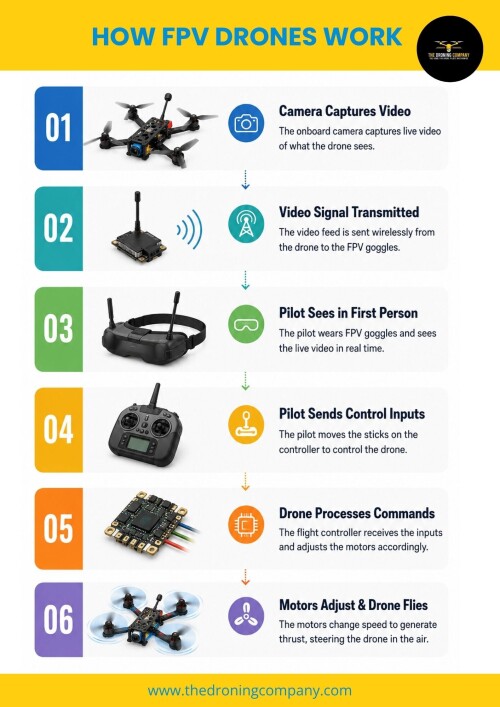
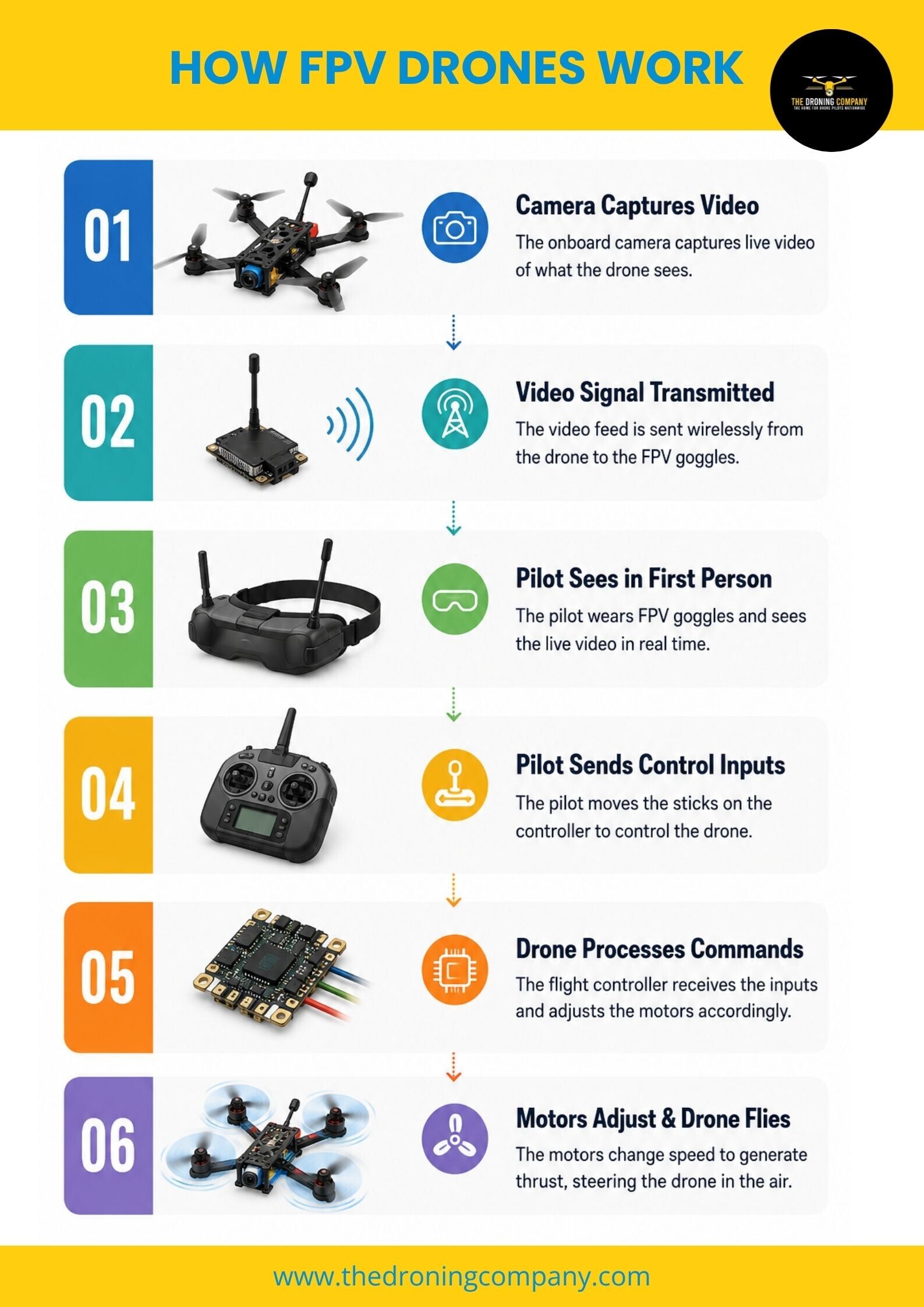
1. Camera Captures Video
The FPV drone is equipped with an onboard camera mounted at the front of the aircraft. As the drone flies, the camera continuously records the surroundings and captures real-time video from the drone's perspective.
2. Video Signal is Transmitted
The live video captured by the camera is sent to a Video Transmitter (VTX) installed on the drone. The VTX wirelessly broadcasts the video signal to the pilot's FPV goggles or display device, usually with very low latency.
3. Pilot Sees in First Person
The pilot wears FPV goggles that receive the transmitted video feed. This creates an immersive first-person experience, making the pilot feel as though they are sitting inside the drone and flying through the air.
4. Pilot Sends Control Inputs
Using a radio controller, the pilot sends commands such as throttle, pitch, roll, and yaw. These inputs determine the drone's speed, altitude, direction, and movement while in flight.
5. Drone Processes Commands
The drone's flight controller acts as its brain. It receives the control signals from the pilot and processes them along with sensor data from components such as gyroscopes and accelerometers. The flight controller then calculates the adjustments needed for stable flight.
6. Motors Adjust and the Drone Flies
Based on the flight controller's calculations, the Electronic Speed Controllers (ESCs) regulate the speed of each motor. The motors spin the propellers at different speeds, generating thrust and enabling the drone to move forward, backward, sideways, upward, or perform aerial maneuvers.
Learn more How FPV Drones Work: https://thedroningcompany.com